
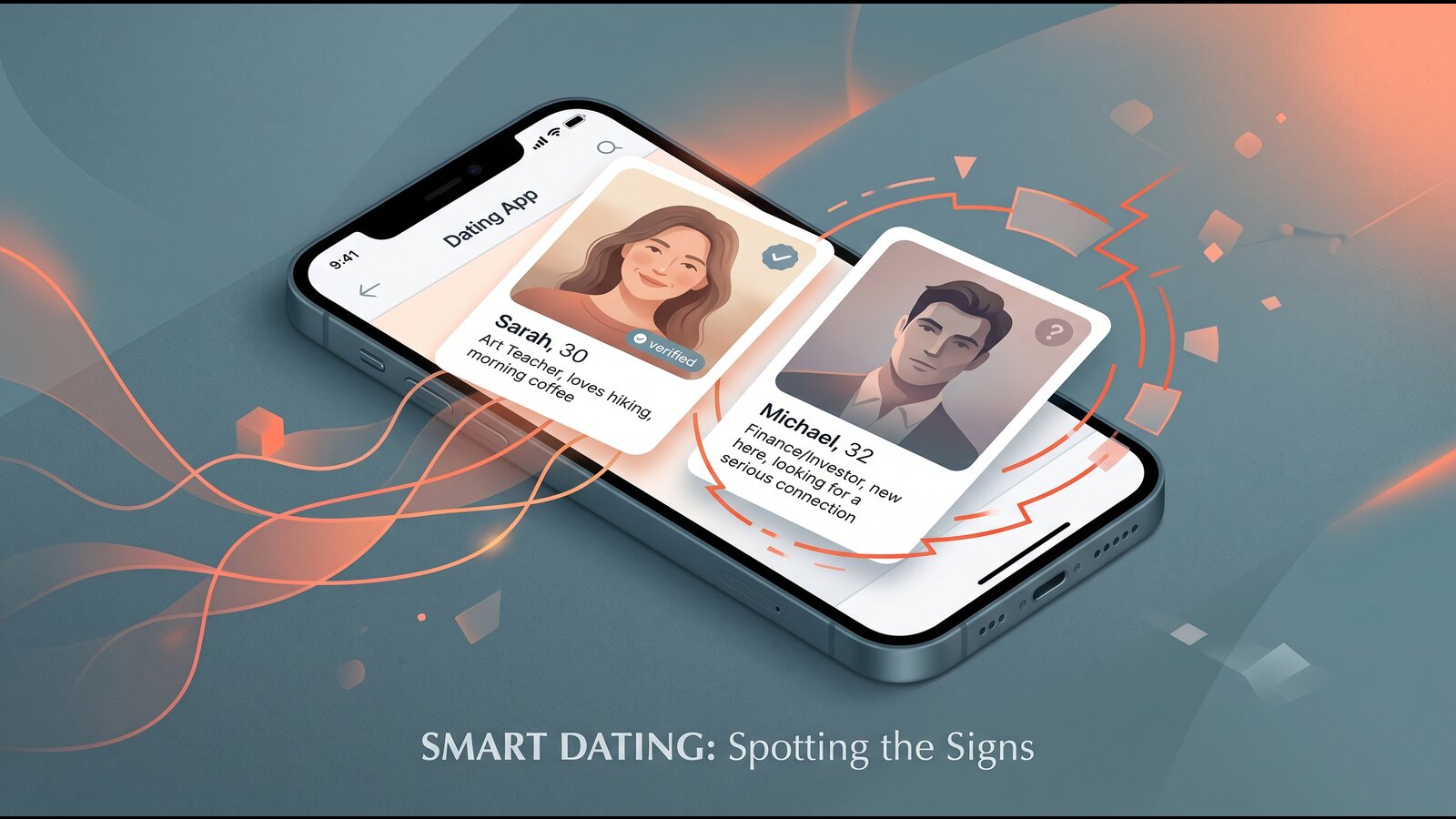
How Romance Scams Work: The Anatomy of Modern Fraud
Editorial note
Settings and service behavior can change. Check current device guidance and avoid removing managed security controls without authorization.
Romance scammers follow a playbook. They don't improvise; they execute a calculated emotional and financial attack. Understanding the steps helps you spot the pattern before you're invested.
Love Bombing & Building Trust
The scammer starts with a carefully crafted fake profile—often stolen photos of an attractive person—and targets people who signal they're looking for a serious relationship. Within days (sometimes hours), they express interest, send long messages, and use affectionate language. This is called love bombing: overwhelming you with attention and flattery to make you feel special and lower your emotional guard.
They'll share "personal" stories (usually lies) to create false intimacy. They'll ask questions about your life, your dreams, your family—anything to make you feel heard and understood. This emotional investment is the foundation of the scam. Once you feel connected, you're far less likely to question their motives or demands later.
Moving Off-Platform (WhatsApp, SMS)
After a few days or weeks of messaging on the dating app, the scammer suggests moving to WhatsApp, SMS, email, or another platform. Their reason? "The app keeps crashing," "I want to talk more privately," or "This is easier." The real reason: moving off-platform means the dating app's safety features, reporting tools, and conversation records no longer apply. You're now in a private channel where the scammer has more control.
The Ask: Money, Gifts, or Sensitive Info
Once the conversation is private and emotional trust is high, the ask comes. Sometimes it's gradual: they mention a financial emergency (medical bill, visa fee, business problem). Other times it's direct. They ask for money (bank transfer, wire, cash app), gift cards (Google Play, iTunes), crypto, or access to your accounts.
Variations include asking you to purchase items on Amazon or Best Buy and send the codes, open a new bank account and send login details, or share your Social Security number, ID, or financial information for a fake "joint account" or "investment."
Investment Trap ("Pig Butchering")
A sophisticated variant is "pig butchering." The scammer uses the romance angle to build trust, then convinces you to invest in fake cryptocurrency, forex, or stock trading schemes. They show you fake trading apps and screenshots of "gains" to encourage larger deposits. The entire system is fake. Once you've transferred money, it's gone. Your "investment account" never existed.
AI, Deepfakes & Stolen Photos
Modern dating scams use stolen photos from real people's Instagram accounts, LinkedIn profiles, or old modeling portfolios. They may use AI-generated faces that look realistic but belong to no one. Some scammers use deepfake technology to create video calls that appear real but are pre-recorded or synthetically generated.
These tools make scams harder to spot. A reverse-image search might not always work if the photo is new, and video calls may look convincing even if they're not live.
Red Flags: What to Watch For in Dating App Conversations
Every scammer leaves clues. Train yourself to recognize these patterns—they're not proof alone, but together they add up to a warning signal.
Too Good to Be True / Model-Like Photos
If someone's profile photos look like they belong on a magazine cover or Instagram influencer account, that's a red flag. Real people on dating apps usually have casual, authentic photos. Model-quality shots in a dating app are statistically more likely to be stolen or fake. Use reverse-image search (Google Images, TinEye, or Bing Image Search) to find the source.
Rapid "I Love You" & Talk of Marriage
Real relationships develop slowly. If someone says "I love you" after a few days, talks about marrying you, or makes long-term plans before you've met or even video called, it's a scam tactic. Scammers accelerate emotional intimacy to create urgency and obligation.
Excuses to Avoid Video Calls or Meetings
A real person will want to meet or at least video call to verify they're real. If someone constantly delays, makes excuses ("my camera is broken," "I'm traveling," "I'm in a remote area"), or refuses to video call after weeks of messaging, they're likely not who they claim to be.
Requests for Money
Any request for money, gift cards, crypto, or financial information is a red flag. Legitimate dates don't ask for cash. If the person claims they're in an emergency and only you can help, that's emotional manipulation.
Inconsistent Stories or Profile Details
Pay attention to what they tell you. Do their job, location, family situation, or background change over time? Do they give vague answers to simple questions? Real people have consistent stories. Scammers often slip up or forget what they said before.
Pressure to Keep the Relationship Secret
If they ask you not to tell friends or family about them, or suggest keeping the relationship "private," that's a control tactic. Scammers isolate you because friends and family are more likely to spot the fraud.
Urgency & Emotional Manipulation
Phrases like "I can't live without you," "you're my only hope," "if you really loved me, you'd help," or "I need this by tomorrow" are manipulation tactics. They create artificial pressure to bypass your critical thinking.
How to Protect Yourself on iPhone & Mac
Prevention is far easier than recovery. Here are practical steps to verify people before you invest emotionally or financially.
Do a Reverse Image Search on Their Profile Photo
Right-click or long-press on their profile photo and choose "Search Image" (Google, Bing, or TinEye). If the image appears elsewhere online or on someone else's profile, it's stolen. If it matches a modeling portfolio or influencer account, it's not the person claiming to chat with you.
Insist on a Video Call
A real person will video call. Use FaceTime, Google Meet, or the dating app's video feature. Ask them to do something specific on camera—wave, show their surroundings, or confirm a detail you discussed. Deepfakes and pre-recorded videos can't respond to live requests.
Research Their Name, Email & Phone Number
Google their name along with any details they've shared (job, company, school, location). Search their email address and phone number on social platforms. Verify they exist and that their story aligns with their online presence. Scammers often use burner emails and phones that don't link to real identities.
Keep Conversations on the Dating App (At First)
Don't move to WhatsApp, SMS, or email until you've verified they're real. The dating app has reporting and block tools. Once you're in a private channel, those protections disappear. Stay on-app until you've video called and done your research.
Enable Two-Factor Authentication on Your Accounts
If a scammer gets your password, two-factor authentication (2FA) adds a second barrier. Enable it on your email, banking apps, Apple ID, and any account with sensitive data. On iPhone or Mac, use Settings > [Your Name] > Password & Security to manage 2FA.
Trust Your Gut
If something feels off, it probably is. Scammers are good at what they do, but they're not perfect. If you find yourself making excuses for their behavior or second-guessing your instincts, pause and ask a trusted friend. Outside perspective is powerful.
Report & Block Suspicious Profiles Immediately
Don't engage further. Report the profile to the dating app using their reporting feature, block the account, and delete the conversation. Dating apps train AI to flag scam patterns. Your report helps protect others.
Common Scam Types to Know
Classic Romance Scams
The scammer builds a fake romantic relationship over weeks or months, then asks for money for a fake emergency, travel, medical procedure, visa fee, or business crisis. Once they get money, they either disappear or keep asking for more.
Pig Butchering (Fake Investment Schemes)
The scammer uses romance to gain trust, then introduces you to a fake investment opportunity (crypto, forex, stocks). They show you fake trading platforms and screenshots of "profits" to encourage bigger deposits. Once you've sent money, the account disappears.
Sextortion (Blackmail with Intimate Images)
The scammer builds a relationship, convinces you to send intimate photos, then threatens to share them with your contacts unless you pay. This is extortion and a crime. Report it to local law enforcement and the FBI.
Verification Scams (Stealing Credentials)
The scammer asks you to verify your identity by sharing a photo of your ID, passport, or financial documents. These are used for identity theft, fraud, or selling on the dark web. Never share government IDs or financial documents with someone you haven't met in person.
Catfish & Deepfake Profiles
A catfish uses fake or stolen photos but may not ask for money immediately—they're testing your emotional response. Deepfakes use AI-generated or manipulated video to appear real. Both are forms of deception used for catfishing, fraud, or social engineering.
What to Do If You've Been Targeted or Scammed
Change Your Passwords Immediately
If you've shared your email address or any login details, change your passwords for email, banking, social media, and Apple ID right away. Use strong, unique passwords (a password manager like iCloud Keychain helps). If the scammer has your email, they might try to reset other accounts.
Report to the Dating App & Your Bank
Contact the dating app's support team and report the fraudulent profile. If you've sent money via bank transfer, wire, or app, contact your bank immediately. Freezing or reversing the transaction is possible if done quickly. For gift cards or crypto, contact the issuer (Apple, Google, Coinbase) to report the fraud—some may flag the cards before they're spent.
File a Report with the FTC & FBI
Report the scam to the Federal Trade Commission at reportfraud.ftc.gov. File a complaint with the Internet Crime Complaint Center (IC3) at ic3.gov. These reports build databases that law enforcement uses to track and prosecute scammers. The FBI has a specific section for romance scams.
Monitor Your Credit & Accounts
If the scammer has your Social Security number, birthdate, or address, they may attempt identity theft. Place a fraud alert on your credit reports (Equifax, Experian, TransUnion) and monitor your accounts for unauthorized activity. On iPhone, enable Credit Freeze through your credit bureau's app.
The Core Truth
Scammers succeed because they understand human psychology. They exploit loneliness, hope, and the desire for connection. The best defense isn't paranoia—it's verification. Meet in person, video call early, research their background, and trust your instincts. Real relationships develop at a natural pace. Anything rushed is a red flag.
Red Flag Decision Guide
| Red Flag | Risk Level | Action |
|---|---|---|
| Model-like profile photos | High | Reverse-image search immediately. If stolen, block and report. |
| Refuses to video call after 1 week | Critical | Stop messaging. If asked for money, block. It's a scam. |
| Asks for money before meeting | Critical | Stop all contact. Report to dating app and block. Do not send anything. |
| "I love you" in first week | High | Proceed with caution. Verify identity and background before deepening connection. |
| Asks to move off-platform immediately | Medium-High | Stay on-app until you've video called and verified. Dating apps have better safeguards. |
| Inconsistent personal details | High | Note the inconsistencies and ask clarifying questions. Scammers slip up under pressure. |
| Requests intimate photos | Critical | Do not send. This is sextortion setup. Block and report to dating app and FBI. |
| Story feels rushed or too perfect | Medium | Trust your gut. Slow down. Real relationships don't need to rush. |
Common Questions About Dating Scams
How can I tell if someone on a dating app is a scammer?
Watch for warning signs like a perfect model-like profile photo, rapid declarations of love, pressure to move conversations off-app, reluctance to video call, requests for money, or inconsistent personal details. Reverse-image search the photo and research their name and email. If something feels off, it usually is.
What is a pig butchering scam?
Pig butchering is a romance scam where the scammer builds trust with a fake romantic connection, then persuades the victim to invest in fake cryptocurrency or trading schemes. The 'pig' is the victim, and 'butchering' refers to extracting as much money as possible before disappearing.
What should I do if I've already given money to a potential scammer?
Change all your passwords immediately, report the person to the dating app and your bank, file a report with the FTC (reportfraud.ftc.gov) and the FBI (ic3.gov), and monitor your credit for unauthorized accounts. Keep all evidence of conversations and transfers.
Is it safe to share my phone number on a dating app?
Avoid sharing your phone number early. Keep initial conversations on the dating app where you can block or report the person easily. Once you're confident someone is real—after video calls and verification—then consider moving to direct messaging or text.
Beyond the Basics
Dating scams evolve. Here are deeper topics that help you stay ahead of the tactics.
Related Reading
Protect Your iPhone & Mac from Scams
Dating scams are just one piece of online fraud. Free VPN US encrypts your connection and changes your IP address, making it harder for scammers to profile you on public Wi-Fi or locate your device when you're browsing. Combined with smart behavior, it's a layer of protection.
- Encrypted connection on public Wi-Fi
- Ad-supported free access
- No logs policy