
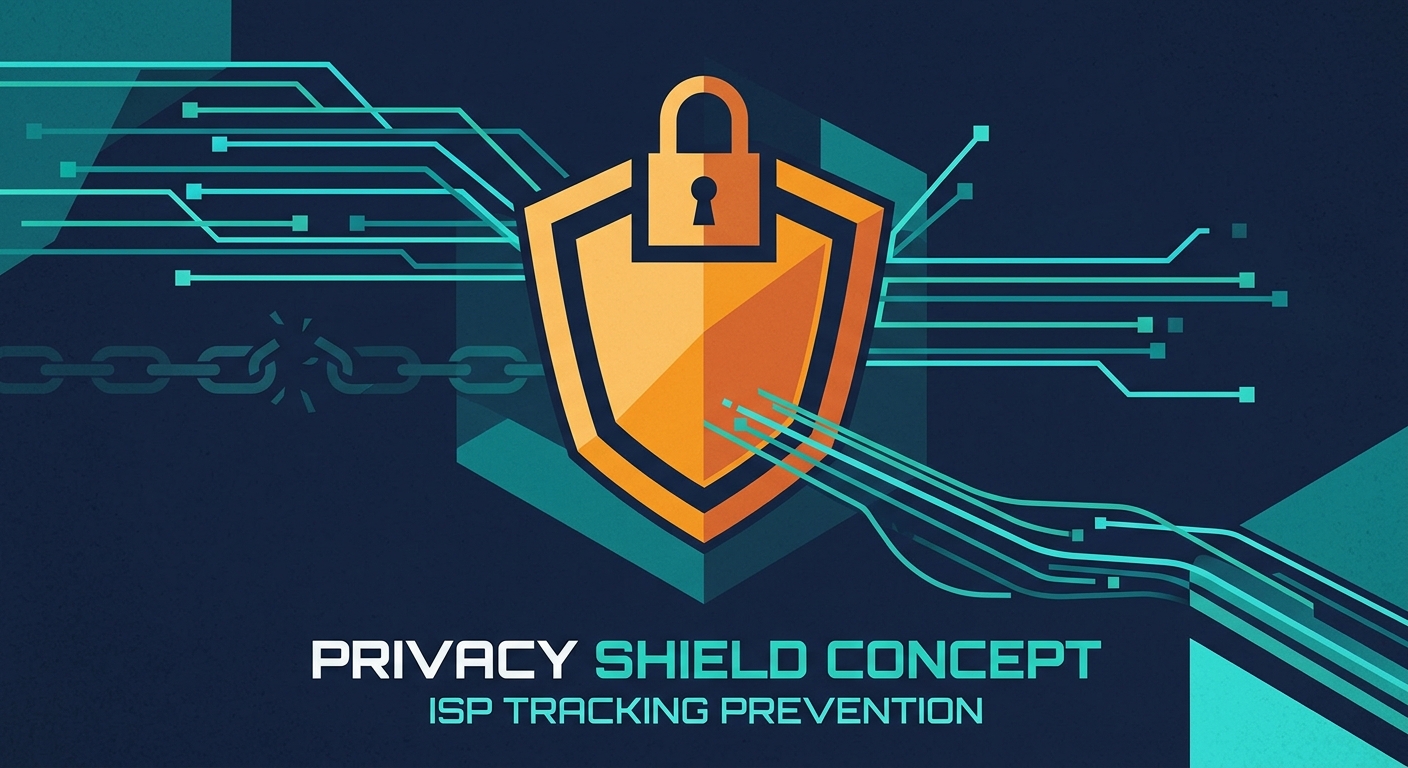
How Free VPN US Encrypts Traffic
FREE VPN US creates an encrypted tunnel from your device to a VPN server and masks your visible IP address. This reduces local-network and ISP visibility into destinations inside the tunnel.
AES-256 Encryption and a Published No-Logs Position
The current App Store listing identifies AES-256 encryption and a no-logs policy. Encryption protects traffic in transit to the VPN server; it does not stop tracking through account logins, cookies, or browser fingerprinting.
What Other Networks Can Still Observe
Your ISP can see that you connect to a VPN, along with timing and data volume. Websites generally see the VPN server's IP, but can still recognize you through accounts and other device signals.
Use Verifiable Terms
FREE VPN US uses AES-256 encryption according to its current App Store listing. Review the privacy policy and current App Store disclosures instead of relying on absolute privacy claims.
How a VPN Changes ISP Visibility
When the VPN is active, your ISP sees an encrypted connection to the VPN server rather than destinations inside that tunnel.
Without a VPN
Your ISP can observe connection metadata and may be able to infer or see requested destinations depending on protocol and encryption.
With Free VPN US
Your ISP still sees VPN usage, timing, and data volume, but not the destinations carried inside the encrypted tunnel.
Why Free VPN US Matters
A VPN reduces what an ISP can learn about destinations inside the encrypted tunnel. It does not hide VPN usage, connection timing, or data volume, and it does not prevent tracking by sites where you sign in.
Using Free VPN US on Public Wi-Fi
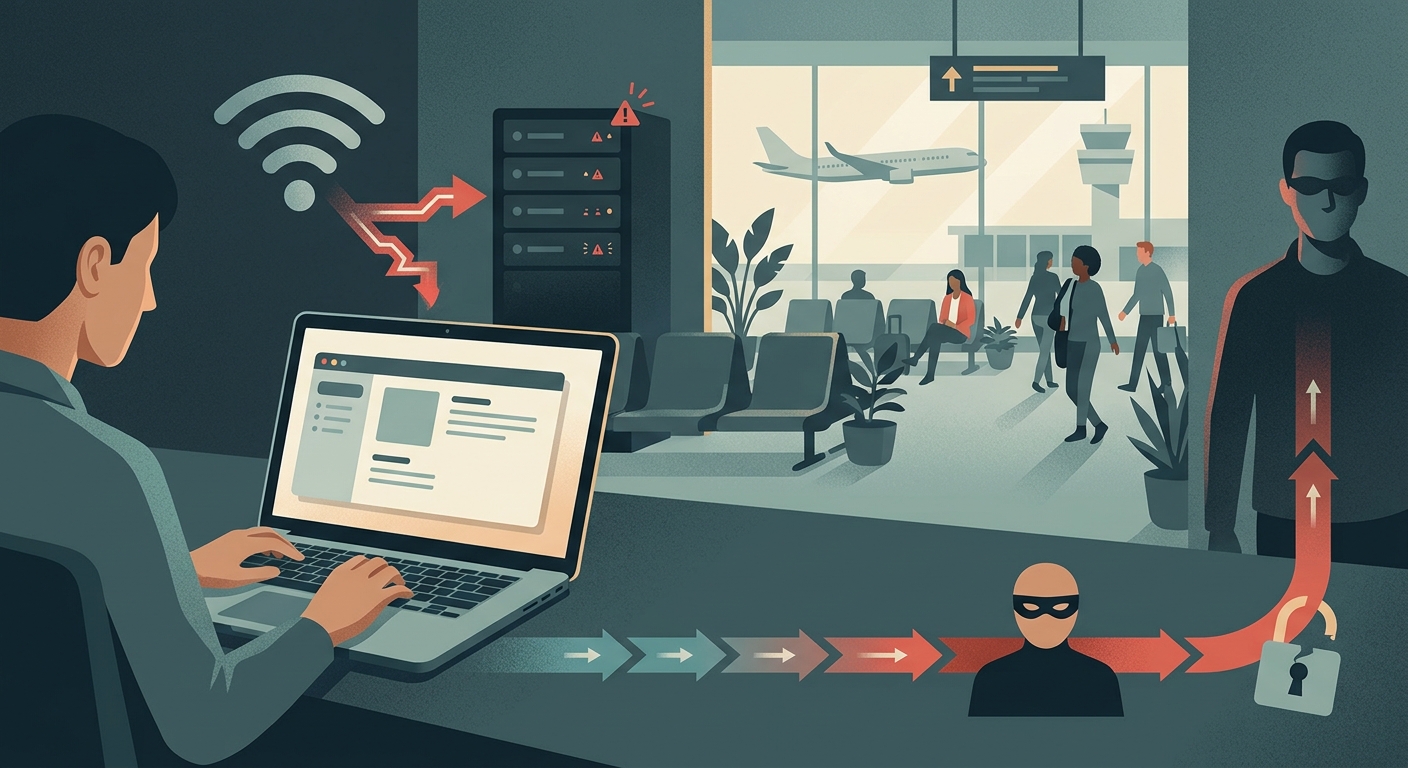
A VPN encrypts traffic between your device and the VPN server, reducing exposure to people monitoring the same local network. It cannot make a fraudulent hotspot or phishing page trustworthy.
Public Wi-Fi Risks
Shared networks can expose connection metadata and create opportunities for malicious hotspots. HTTPS and an active VPN help protect traffic in transit, while device updates and careful network selection still matter.
Protection Has Limits
A VPN does not stop malware, phishing, weak passwords, or account compromise. Avoid sensitive transactions on networks you do not trust when a safer connection is available.
Layer Your Security
Use strong, unique passwords; enable two-factor authentication; keep your operating system and apps updated; and check that websites use HTTPS.
VPN Protection Works Best with Good Habits
Combine encrypted traffic with strong passwords, two-factor authentication, current software, and careful browsing.
How IP Masking Works
While connected, websites generally see the VPN server's IP address instead of the public IP assigned to your connection.
What an IP Address Can Reveal
An IP address can indicate an approximate location and network provider. It does not by itself reveal your precise physical address or identity.
Free VPN US IP Masking
FREE VPN US masks your visible IP while connected. Websites can still identify you through sign-ins, cookies, fingerprinting, and information you submit.
Combine IP Masking with Browser Controls
Use browser tracking controls and private-browsing features where appropriate, but remember that neither prevents all forms of identification or tracking.
What VPNs DON'T Protect You From
Understanding the limits of VPN protection is crucial for realistic security expectations.
Malware and Viruses
A VPN does not protect you from malware. If you download a malicious file, a VPN won't stop it from infecting your device. You need anti-malware software and careful downloads.
Phishing and Social Engineering
Phishing attacks (fake emails, fake websites) work regardless of VPN use. A VPN cannot tell you if a website is legitimate. Safe browsing practices and skepticism matter more than VPN protection.
Weak Passwords and Account Compromise
If your password is weak, a VPN won't prevent account takeover. If you reuse passwords across sites and one site is breached, attackers can access your other accounts. A VPN protects the transmission, not the account itself.
DNS Leaks
Sometimes VPN configuration allows DNS requests to leak, revealing what sites you visit. Quality VPNs prevent this, but it's worth checking. Some free VPNs leak DNS.
Government or Legal Surveillance
In countries with strong government surveillance, a VPN adds protection but is not foolproof. Governments can compel VPN providers to reveal logs (if they keep them) and can use other methods to track users. A VPN helps but is not a complete defense against government-level surveillance.
Why VPN Provider Matters
The effectiveness of a VPN depends entirely on the VPN provider.
No-Logs Policy
A VPN provider can see all your traffic. If they keep logs of your activity, that data exists and can be accessed by law enforcement, hackers, or the company itself. A trustworthy VPN should have a no-logs policy—meaning they don't store your browsing data.
Jurisdiction Matters
A VPN provider's legal jurisdiction affects how they respond to surveillance requests. A VPN based in a country with strong privacy laws is more protective than one in a country with government surveillance mandates.
Company Reputation
Free VPNs are often suspicious. They need to make money somehow—if you're not paying for the service, your data is the product. Free VPNs often sell user data, inject ads, or contain malware. Paid VPNs with strong reputations are worth the investment.
How to Use a VPN Properly
VPN privacy requires proper setup and habits.
Keep VPN Enabled Consistently
For maximum privacy, keep your VPN connected all the time, not just when you remember. Most modern VPNs have "always-on" features. Free VPN US automatically reconnects if dropped.
Choose Appropriate Server Locations
For privacy (not bypassing), your server location doesn't matter much. Pick any server. For performance, choose a server close to your actual location.
Verify Kill Switch Is Enabled
A kill switch cuts your internet if the VPN drops, preventing unencrypted traffic from leaking. Make sure this is enabled.
Check for DNS Leaks
Use a DNS leak test tool to verify your VPN isn't leaking DNS queries. Quality VPNs prevent this, but it's worth checking occasionally.
Use Strong Passwords
A VPN protecting your transmission doesn't help if your passwords are weak. Use strong, unique passwords for all accounts.
Frequently Asked Questions
What does a VPN actually protect me from?
A VPN encrypts your browsing data and hides your IP address from websites and ISPs. It protects you from ISP tracking, public Wi-Fi snoopers, and basic DNS leaks. It does NOT protect you from malware, phishing, weak passwords, or malicious websites.
Can my ISP see what I'm doing with a VPN?
A VPN encrypts your traffic, so your ISP can see that you're using a VPN and some metadata, but they cannot see the websites you visit or the content you access. Without a VPN, your ISP has full visibility of your browsing activity.
Is a VPN the same as being anonymous?
No. A VPN masks your IP address from websites, but it does not make you anonymous. Your VPN provider can see your real IP and all your traffic. If the VPN keeps logs, that data exists. True anonymity requires additional tools and careful practices.
Why should I use a VPN on public Wi-Fi?
Public Wi-Fi is unencrypted, meaning attackers nearby can intercept your login credentials and see your activity. A VPN encrypts your connection, protecting your passwords and data from other people on the same network.
Learn More About Online Privacy
Explore deeper privacy topics and safe browsing practices. For product-specific data handling, read how FREE VPN US handles data.
Related Guides

Add VPN Protection on iPhone and Mac
Use an AES-256 encrypted tunnel, mask your visible IP address, and choose from available servers. A VPN remains one part of a broader privacy and security setup.
- Published no-logs position
- Available global servers
- Performance controls
- Reduced ISP destination visibility
- IP masking
- Public Wi-Fi protection