

It's Happening Right Now. At This Moment.
You are being tracked.
Not someday. Not eventually. Right now. At this second.
Your ISP knows which websites you're visiting. Not guessing—actually seeing them. A data broker has compiled information about your habits, your interests, your income estimate, your family members, maybe your health concerns. That profile exists independently of whether you know about it. And if there's been a breach—which there have been, multiple times, affecting millions—your information has been copied, modified, and resold on dark web marketplaces where criminals trade stolen data like currency.
Meanwhile, someone wearing Ray-Ban Meta smart glasses could walk past you, glance at your face, and have your identity returned instantly via facial recognition. You would have no idea it happened. You'd never see the recording. You'd never consent. It's already possible. It's already happening.
This isn't a hypothetical future. This is right now. Today. This infrastructure exists and is being used.
But here's what matters more: you are not helpless. There are specific, documented things you can do to reduce your exposure to these real, verified threats. Not eliminate them—the internet doesn't work that way. But substantially reduce them. Sever the connection between your data and your doorstep. Make yourself a harder target.
Let's start with what's actually happening.
The Difference Between Fear and Smart Caution
Fear says "everything is being watched and there's nothing I can do." Smart caution says "these specific systems exist, they're documented, and here's what I can do about each one." This guide is the second one. Everything here is verified. Everything here is happening right now. And everything here has a practical response.
Your Neighbor Could Be Recording You Right Now. Without Your Knowledge.
Ray-Ban Meta smart glasses are commercially available. They have cameras. They have microphones. And they have facial recognition integration.
Here's what you're actually dealing with: Ray-Ban Meta glasses contain built-in cameras that record video and audio. Meta has licensed facial recognition technology from Rank One (ROC)—the same company that supplies facial identification systems to the U.S. Marshals Service, FBI, and military organizations. Through this integration, someone wearing Ray-Ban Meta glasses can look at your face and instantly receive your identity.
This is not theoretical. In April 2026, the ACLU and a coalition of more than 75 civil rights and privacy organizations issued a direct warning about Ray-Ban Meta glasses specifically, citing the risks of mass surveillance, involuntary identification, and tracking.
Here's How It Works Against You
Someone wearing smart glasses walks into a coffee shop. They're not talking to anyone. They're not holding a phone to their face. They're just looking around. But as their eyes move across the room, the facial recognition system is working. You sit at a table, your face is visible, and in seconds—without any indication, without any request for permission, without any notification—the system returns your name, potentially your address, potentially your social media profiles.
You have no way of knowing this happened. There's no sound. No visible confirmation. You just exist in public, and you've been identified.
Is this legal? In most U.S. states, yes. Public spaces have reduced privacy expectations. But legal doesn't mean safe. And it definitely doesn't mean okay.
What This Means For You
You can be identified in public without your consent. This identification can be recorded. It can be stored. It can be cross-referenced with other data about you. You can be tracked across physical locations without knowing it. You can be identified by people you've never met, for purposes you'll never know about.
A VPN cannot stop this. A VPN protects data in transit across the internet. Smart glasses cameras record locally, on the device, and upload directly to Meta's servers. Your internet connection is never involved. No encryption in the world changes that.
What Actually Helps
First, understand the threat. Know that it's real and happening now. Advocate for legislation that requires notification when recording is happening. Support laws that restrict facial recognition in everyday devices—some cities have already started this. Avoid sensitive spaces where you don't want to be recorded. Be aware of your surroundings and the devices people are wearing. That awareness is your power.
The broader point: this threat is documented, it's real, and it's already happening. It's not something technology alone can solve. It requires awareness, advocacy, and choices about which spaces and which people you trust.
Your ISP Is Logging Every Website You Visit. Right Now. Today.
Your Internet Service Provider controls the pipes that connect you to the internet. They have complete visibility into where you're going online.
This is technical fact. Not a theory. Not a worry. Fact.
What Your ISP Knows About You
Right now, your ISP has a record of:
- Every domain you visit — reddit.com, your bank, health search sites, therapy resources, job search engines, dating apps, political sites, religious resources. All of it.
- When you visit them — timestamps down to the minute, patterns of when you browse
- How much data you're transferring — rough indicators of how long you stay, how many pages you load
- Your IP address and devices — permanent identifiers that connect the data to you specifically
They typically can't see the content of what you do on those sites if you're using HTTPS encryption (which most sites use now). But they absolutely, completely see where you're going. The domain is right there in the log.
What Happens To This Data About You
ISPs use browsing data for:
- Targeted advertising — they sell insights to advertisers who bid for access to people with your browsing patterns
- Selling to data brokers — your ISP can anonymize the data and sell it to third parties, who then try to re-identify it
- Law enforcement cooperation — when law enforcement presents a warrant, your ISP hands over your records
- Building profiles — the more data they collect, the more valuable you become as a data product
This is not speculative. This practice has been documented across multiple major ISPs. Reports from the FTC, ACLU, and investigative journalists have confirmed that ISPs collect and monetize browsing data.
The Real Impact: Your Data Is Being Sold. Probably Today.
Your browsing data is valuable. Every site you visit tells a story: your health concerns, your political views, your financial situation, your relationship status, your religious beliefs. When ISPs sell this data (anonymized, they claim), they're selling your story in pieces to people who profit from having it.
Worse: once that data is packaged and sold, it's harder to control. It gets re-sold. It gets combined with other data. If the buyer suffers a breach, your information can end up on the dark web.
And all of this is happening because your ISP can see your traffic. Because they're not prevented from collecting it. Because there's profit in it.
How a VPN Actually Changes This
When you use a VPN with AES-256 encryption and a strict no-logs policy, your traffic goes through an encrypted tunnel to a VPN server. Your ISP can see that you're using a VPN, but they cannot see where you're going. They see encrypted data, not domain names. They see that you're connected to a VPN server, not which websites you're visiting.
This means your ISP's visibility into your browsing habits is drastically reduced. They can't build a profile on you based on your domains. They can't sell your browsing data to advertisers and brokers. They don't know if you're looking for health information, job searches, or anything else.
Is it perfect? No. A VPN doesn't protect you if your ISP is using deep packet inspection or other advanced techniques, and there are concerns about future restrictions on VPN usage. But for right now, for everyday ISP tracking, a VPN with AES-256 encryption and a no-logs policy is the most effective tool available.
This is one of the clearest, most direct ways to sever the connection between your data and the people trying to exploit it.
Your Information Is Being Traded on Black Markets. For Money. Without Your Permission.
You have never heard of most of the companies that know the most about you.
Data brokers are companies that legally collect, aggregate, and sell personal information. They're not hackers. They're not criminal enterprises. They're legitimate businesses operating in a largely unregulated space. And they know an astonishing amount about you.
What Data Brokers Have Compiled About You
A typical data broker profile includes:
- Your full name, address, phone numbers (current and historical), email addresses
- Your browsing history purchased from ad networks
- Shopping and purchase history (usually bought from retailers or loyalty programs)
- Financial information — income estimates, credit scores, mortgage status, banking patterns
- Health interests and search history (from health websites that sell data)
- Family members, relatives, relationship status
- Political affiliations, donations, voting history
- Social media activity and profiles
- Criminal and civil court records
- Employment history and current employer
This data is sold every single day. Companies buy it for targeted advertising. Employers buy it for screening. Financial companies buy it for risk assessment. Insurance companies buy it. Credit card companies buy it. The machinery is massive and it's legal.
From Legal Data Sales To The Dark Web
Here's where it turns dangerous: when data brokers suffer breaches—and they do, regularly—millions of records get stolen. Criminals buy these dumps from hackers on dark web forums. They combine stolen data from multiple breaches. They resell it. Your information—originally sold legally by a data broker—ends up in a criminal marketplace where anyone with cryptocurrency can buy access to your entire profile.
This has happened multiple times. Data brokers like Acxiom have suffered massive breaches exposing 1.6+ billion records. Those records ended up on the dark web. Your information may already be there, combined with other stolen data about you, available for purchase by anyone.
The dark web isn't some secret corner of the internet. It's just the internet accessed through anonymity tools. Criminals use it. Law enforcement uses it. Whistleblowers use it. And stolen data trades hands there openly, in marketplaces, like a stock exchange for your compromised identity.
What You Can Do
Data broker removal services help you request deletion from data broker databases. It takes time, but most states now have laws requiring brokers to honor removal requests. The catch: brokers re-collect the data. They'll have data about you again within months or years. You need to repeat the removal process regularly.
Breach monitoring services (like Have I Been Pwned, which is free) alert you when your email appears in a compromised database. This gives you time to act before criminals do. When you get alerted: change your password immediately, monitor the affected account for fraud, enable two-factor authentication, and consider a credit freeze.
Credit freezes are simple and free. You call Equifax, Experian, and TransUnion and request a freeze on your credit file. This prevents new accounts from being opened in your name, which is the primary way criminals use stolen data. A freeze doesn't affect your credit score, and you can temporarily unfreeze if you actually need to open a new account.
A VPN helps by reducing how much new browsing data gets collected about you in the first place. But a VPN doesn't protect data that's already been sold by brokers or compromised in breaches—that data is independent of your internet connection.
Yes. This Is Documented. It's Happening Right Now.
Your fear is justified. And your awareness is your power.
Smart glasses with facial recognition exist. They're being used. The ACLU warned about it. ISPs log your browsing. This is documented, confirmed, happening at scale. Data brokers sell your information. Breaches happen. Your data ends up on the dark web. These aren't speculative threats—they're documented realities.
But Here's What's Also True
You're not being personally targeted by a government agency unless you actually have a specific legal reason to be. Most surveillance is automated and impersonal. It's about your data, not about you specifically. The goal is scale and profit, not personal persecution.
And you're not helpless. You have specific, practical tools available right now that substantially reduce your exposure.
The Smart Response
Validate your concern—yes, these things are real. Then move to practical action: use a VPN to hide from your ISP. Remove yourself from data brokers (repeatedly, as needed). Enable breach monitoring. Freeze your credit. Use strong, unique passwords with two-factor authentication. These actions don't eliminate surveillance—nothing does in the modern internet. But they reduce your exposure to documented threats significantly.
This isn't paranoia. Paranoia is fear without evidence. What you have is information. And information enables you to act.
Here's How You Actually Stop This
You can sever the connection between your data and your doorstep. Not completely. But substantially.
VPN: Hide From Your ISP (The Most Direct Win)
What it solves: ISP tracking, public WiFi eavesdropping, location inference
How it works: A VPN encrypts your traffic with AES-256 encryption (AES-256, the same standard used by the U.S. government for classified information). Your ISP sees encrypted data, not domain names. Websites see the VPN server's IP, not yours. Your data is protected in transit across the internet.
What matters: Choose a VPN with a strict no-logs policy (so they can't store records of your activity) and that's been independently audited (so you know the no-logs policy is real). AES-256 encryption is standard now—make sure it's there, but all reputable VPNs have it.
What it doesn't solve: Smart glasses cameras, data that's already been collected and sold, malware, phishing, account compromise. A VPN is one tool, not a complete solution.
Smart Glasses Awareness: Know Your Surroundings
What it solves: Involuntary identification and recording without your knowledge
How it works: Understand the threat. Know what smart glasses look like. Be aware in sensitive spaces (medical offices, bathrooms, changing rooms). Advocate for legislation. Support businesses that restrict recording devices in sensitive areas.
What you can do: If you see someone recording in a sensitive space, you can ask them to stop. They're not legally required to comply in most public spaces, but asking sets a boundary. You can also support privacy advocates pushing for legislation that restricts facial recognition in consumer devices.
Data Broker Removal: Reduce Your Database Presence
What it solves: Your information being available for purchase, reduction in targeted advertising, reduced exposure if a broker is breached
How it works: Services help you send formal removal requests to major data brokers. Most states have privacy laws requiring them to honor removal requests. It takes time (weeks or months), but you can get your information removed.
The reality: Brokers re-collect data. You'll probably need to repeat this annually. But each removal reduces the number of brokers holding your data and the number of times it can be sold.
Breach Monitoring: Know When Your Data Is Compromised
What it solves: Early warning when your email appears in a compromised database, giving you time to act
How it works: Services like Have I Been Pwned (free) and others (paid) monitor dark web marketplaces and breach databases. When your email appears, they alert you. Then you take immediate action.
Your response: Change the password on that account immediately. Check the account for fraudulent activity. Enable two-factor authentication. Monitor for identity theft.
Credit Freeze: Stop Criminals From Opening Accounts In Your Name
What it solves: Identity theft, new accounts opened fraudulently in your name, loans and credit cards taken out without your permission
How it works: You contact Equifax, Experian, and TransUnion and request a freeze on your credit file. This prevents new accounts from being opened. Criminals can't get credit cards, loans, or phone accounts using your stolen data.
The process: Free, takes about 15 minutes per bureau (phone calls or online), takes effect within 1-2 business days. You can temporarily thaw the freeze if you actually need to open a new account. It doesn't affect your credit score.
Strong, Unique Passwords + 2FA: Prevent Account Takeover
What it solves: Account compromise when passwords are breached, unauthorized access to your accounts
How it works: Use a password manager to generate long, unique passwords for every site (16+ characters, random mix). Enable two-factor authentication wherever available (email, banking, social media, everything).
Why it matters: When one site is breached and your password is stolen, that password only works on that one site. Every other account remains secure. Two-factor authentication means even if your password is stolen, someone needs your phone to get in.
Limit What You Create Online
What it solves: Reducing the amount of new data being collected about you
How it works: Think about what you enter online. Every search, every form, every profile contributes to your data shadow. If a service seems too free, you're often the product—your data is being collected and sold.
Practical step: Don't enter information you don't have to. Opt out of data collection where possible. Read privacy policies. Use privacy-focused alternatives when available.
The Power of Layered Defense
No single tool solves everything. But together, these tools reduce your exposure across multiple vectors:
- VPN = ISP can't track you
- Breach monitoring = you know when you're compromised
- Credit freeze = criminals can't use your data to open accounts
- Data broker removal = fewer places your data is available
- Strong passwords + 2FA = your accounts stay yours even if data is breached
- Awareness = you know what's happening and can respond
Together, they don't eliminate surveillance. But they make you a harder target. They reduce the connections between your data and the people trying to exploit it. They give you practical power in a system designed to collect and monetize information about you.
Frequently Asked Questions
Right now, is my ISP watching what I do?
Yes. Right now, your ISP can see the domain you're visiting. They log timestamps, data volume, and patterns. If you're using HTTPS (most sites do), they can't see what you do on that site, but they know you're there. A VPN with AES-256 encryption and a strict no-logs policy hides this visibility from your ISP.
Can smart glasses identify me without my knowing?
Yes. Ray-Ban Meta smart glasses integrate facial recognition through Rank One (ROC), a company that supplies identification systems to law enforcement. Someone wearing these glasses can walk past you and identify you. You have no way of knowing it happened. The ACLU and 75+ civil rights organizations warned about this in April 2026. A VPN can't stop a physical camera—only awareness and advocating for legislation helps.
Is my data being sold on the dark web?
Your data may already be there. Data brokers collect and sell information about you legally. When they suffer breaches, criminals buy the stolen data and resell it on dark web marketplaces. Services like Have I Been Pwned (free) alert you if your email appears in a compromised database. If compromised: change passwords immediately, monitor accounts, freeze your credit, and watch for identity theft.
Can I completely stop being tracked?
No, but you can reduce exposure significantly. A VPN stops ISP tracking. Data broker removal services reduce your database presence. Breach monitoring alerts you to compromises. Strong unique passwords prevent account takeovers. Credit freezes stop criminals from opening accounts in your name. These tools together don't eliminate surveillance—but they make you a harder target and restore practical privacy.
Take Control
Detailed answers to privacy protection questions. Click any question to expand the answer and take action.
Learn More
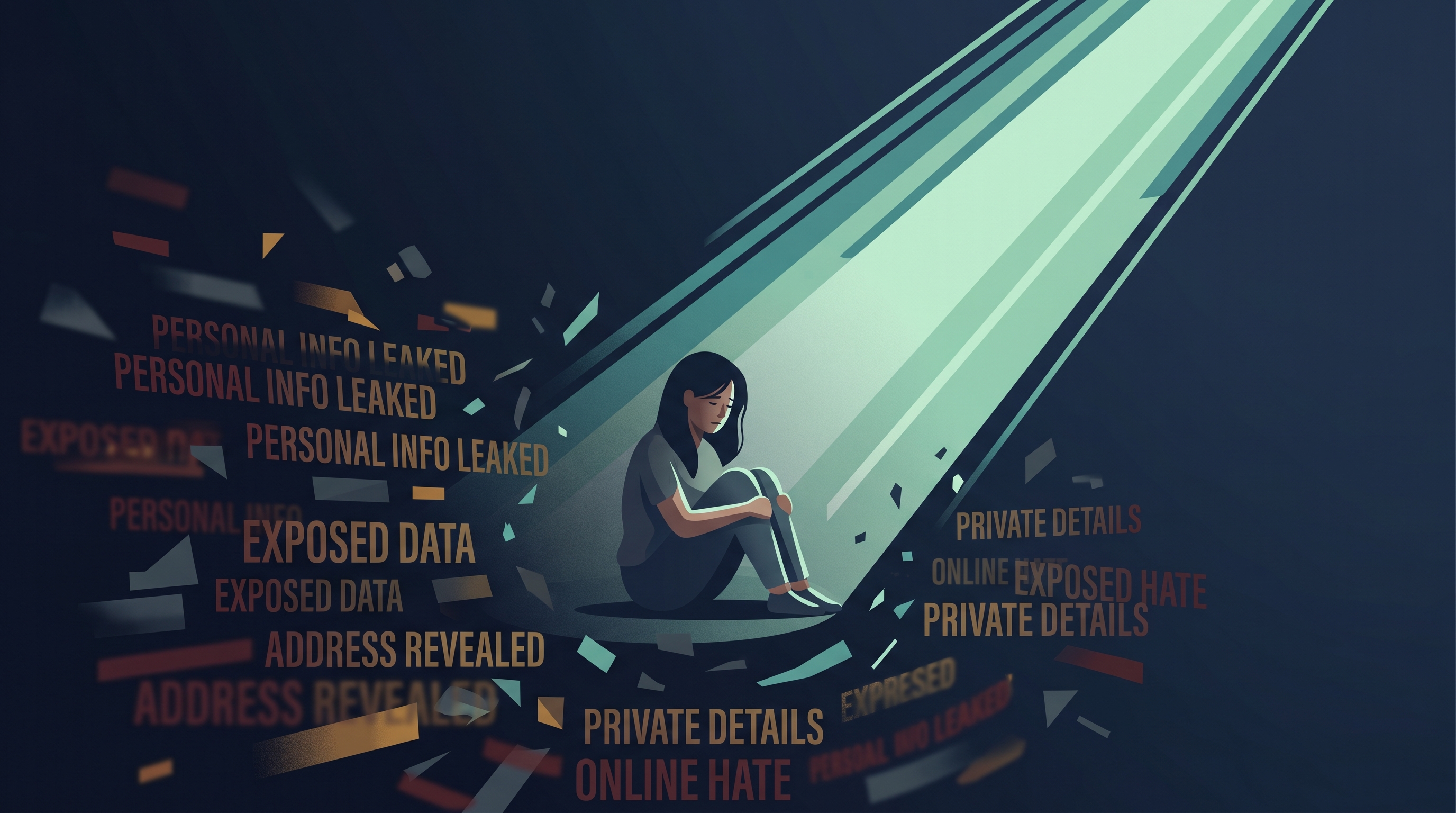

Stop Your ISP From Tracking You
Your ISP is watching your browsing right now. Smart glasses are recording. Data brokers are collecting. A VPN with AES-256 encryption and a strict no-logs policy hides you from your ISP, protects your connection on public WiFi, and helps you sever the connection between your data and your doorstep.
- Hide from ISP tracking
- AES-256 encryption
- Strict no-logs policy
- Public WiFi protection