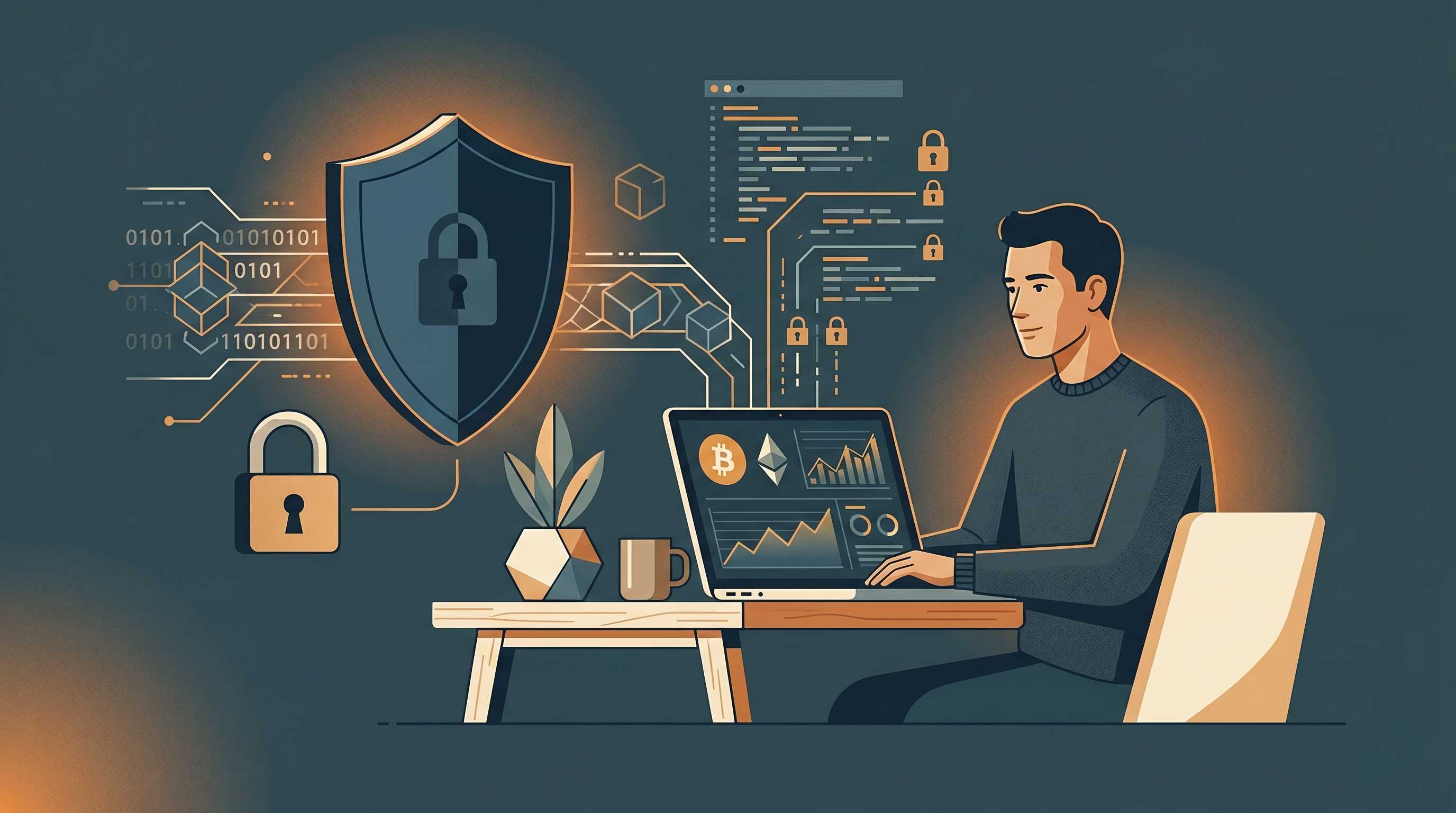
Why Crypto Traders Get Targeted
Crypto is pseudonymous, not anonymous. Every wallet address is a public ledger entry. If someone connects your address to your real identity, they know exactly how much you hold and every transaction you've ever made.
Doxxing happens through: data breaches at exchanges, leaked email addresses, IP address geolocation, social media connections, and blockchain analytics that map wallet addresses to real identities. Free VPN US blocks the IP geolocation vector immediately.
Why This Matters Now
Recent breaches at major exchanges exposed millions of email addresses tied to wallets. Your job is to make that connection impossible to trace back to you by layering security tools like Free VPN US and private browsing.
Protocol 1: VPN Every Single Time
Your IP address reveals your approximate physical location. Every time you access an exchange, blockchain explorer, or any crypto service without a VPN, you're broadcasting that location to them.
Why this matters:
- Exchanges log your IP address when you sign up and every time you log in.
- If that exchange gets breached, your IP gets stolen.
- IP + email = location + real name through data brokers.
The fix:
Before you open your browser to visit any exchange, wallet, or blockchain site, start Free VPN US. It encrypts all your traffic and hides your real IP. Every connection to a crypto service should flow through the VPN tunnel. Free VPN US also offers a private browser to add an extra layer of security and isolation.
This is not optional. It's table stakes for anyone who holds meaningful amounts.
Protocol 2: Separate Your Identities
Your trading identity must be completely firewalled from your real identity. Use separate email addresses, browsers, or devices if possible.
Structure it like this:
- Personal email: Your real Gmail. For friends, work, banking. NO crypto mentions.
- Trading email: A brand new Gmail or ProtonMail registered with a burner phone. Crypto exchanges only.
- Cold storage contact: Another email, used only for hardware wallet recovery phrases. Never touches the internet.
Why separation works:
If a breach happens and your trading email leaks with your wallet addresses, your real identity stays safe because they were never connected in the first place.
The Breach Connection Problem
Data brokers buy leaked email lists from exchanges and cross-reference them against their databases of real names, addresses, and phone numbers. Separate email addresses break this connection before it starts. Pair this with Free VPN US to block IP-based tracking as well.
Protocol 3: Never Post Your Holdings or Movements
This is where most traders fail. One tweet showing a position screenshot, one Discord message celebrating a win, one Reddit comment about "my portfolio"—and you're doxxed.
What not to do:
- Never screenshot your portfolio and post it anywhere.
- Never mention specific holdings on social media.
- Never post your location and crypto activity in the same posts or accounts.
- Never use the same username everywhere.
What to do instead:
Keep your trading activity completely offline or under completely anonymous usernames that are not tied to your real identity or other crypto accounts.
Protocol 4: Email Hygiene and Breach Monitoring
Even with all these precautions, breaches happen. You need to know immediately when your trading email appears in a leaked database.
Monitor your accounts:
- Sign up for breach notification services like Have I Been Pwned.
- Use unique, strong passwords for every exchange account.
- Enable 2FA on every exchange that supports it (authentication app, not SMS).
- Keep a backup of 2FA recovery codes in a secure location.
Assume breaches happen:
Plan your security around the assumption that exchange databases will be breached. If your email and IP are the only connection points between your trading activity and your real identity, and both are firewalled from your personal life with Free VPN US protecting your IP, you're ahead of 99% of traders.
Advanced: Tools and Tactics
| Layer | Tool | Purpose |
|---|---|---|
| VPN | Free VPN US | Hide IP from all crypto sites |
| Private Browsing | Free VPN US Private Browser | Block tracking and cookies |
| ProtonMail | Encrypted, no real name required | |
| Passwords | Bitwarden | Unique password per exchange |
| 2FA | Authy or Aegis | App-based, not SMS |
Common Questions
Can I be doxxed from my wallet address alone?
Not immediately. But blockchain analysis + email breach + IP data + social media = real identity. That's why every layer matters, including using Free VPN US.
Is a VPN enough?
No. A VPN hides your IP, but it doesn't prevent you from accidentally doxxing yourself through social media, email reuse, or metadata. You need all four protocols.
Should I use Tor instead of a VPN?
Tor is slower and some exchanges block it. Use Free VPN US with Tor together for maximum privacy if you're highly paranoid. Free VPN US alone is sufficient for most traders.
What if I already got doxxed?
Stop trading on the accounts tied to that identity. Move funds to a new wallet address generated under a new, completely isolated identity. Start fresh with Free VPN US protecting your new setup.
More Security Guides
Lock down your trading with Free VPN US
Protect every connection to exchanges and wallets with trusted encryption. Get Free VPN US—completely free, no logs, instant security. Plus, use the private browser for extra isolation from trackers.
- Hide IP from all exchanges
- Encrypt wallet activity
- Private browser included