
The Victims Are Real. The Damage Is Permanent.
In 2024, Taylor Swift-themed deepfake images spread across X (formerly Twitter) in minutes. Not a statement. A flood. Thousands of AI-generated images of her violated and exposed. The images went viral before they could be removed. She had no control. Neither did you—your images could be next.
But Taylor Swift can afford lawyers and PR teams. Most victims can't.
A 17-year-old girl in South Carolina had deepfake intimate images of herself created by classmates and shared at her school. She attempted suicide. She survived. But the images are still out there, created without her knowledge or consent, used to humiliate and isolate her.
A research investigation by Likeness Lab found thousands of deepfake intimate images of real women being sold on underground sites. Not AI avatars. Real women. Real names. Real faces. Sold as products. These women didn't know it was happening until they were already victims.
This is the crisis nobody's talking about
It's not the technology that's the story. It's the people being harmed. These aren't hypotheticals. These are women, girls, and public figures whose images have been weaponized. The technology exists. The harm is happening. The platforms know. And most of them are still not moving fast enough to stop it.
How This Is Happening at Scale
Deepfakes and AI-generated fake images are being created and spread through five distinct attack patterns. Understanding them matters because each requires different protection strategies.
1. Non-Consensual Intimate Imagery (Revenge Porn via AI)
Real photos of women are fed into AI tools like DeepNude (now banned but still copied), which strip clothing and create fake intimate images. These are distributed through revenge-porn sites, Telegram groups, Discord servers, and underground forums. The original photo comes from Instagram, Facebook, LinkedIn, or public galleries. The AI does the rest. The victim finds out when someone sends her a link or when it appears in search results.
2. Systematic Harassment Campaigns
Deepfakes are used to target women in tech, gaming, politics, and activism. A woman speaks up. Within days, deepfake videos of her circulate claiming she said or did things she never did. The goal is humiliation, silencing, and psychological damage. It works. Many women withdraw from public life after experiencing this.
3. Celebrity Impersonation & Fraud
Scammers create deepfakes of celebrities on LinkedIn, TikTok, and messaging apps. "Invest with me." "I need help." The victim thinks they're talking to someone famous. They send money. The deepfake convinces them because it looks and sounds real. Millions have been stolen this way.
4. Identity Theft & Credential Fraud
Your face, voice, and identity are combined to impersonate you in video calls, banking apps, and job interviews. A scammer calls your bank claiming to be you. Your biometric data has been stolen from data breaches. The deepfake matches your face. Your account is compromised. You lose money. Your credit is destroyed.
5. Minor-on-Minor Harassment (The Escalation)
High school students are creating deepfakes of classmates' faces on pornographic bodies. Sharing them. Laughing. It's being treated like a prank by schools and parents. It's not. It's creation and distribution of child sexual abuse material (CSAM). The trauma on victims is documented and real. And yet, many schools do nothing.
The Pattern: It Always Targets the Vulnerable
Women are 96% of non-consensual deepfake victims. Minorities and LGBTQ+ individuals experience harassment deepfakes at higher rates. Public figures and activists are targeted to silence them. Children are victimized by peers. It's not random. It's systematic. And it's working as a tool of harassment and control.
Why Platforms Are Failing You
YouTube, Instagram, TikTok, Twitter, Facebook—all have policies against non-consensual intimate imagery. But enforcement is catastrophically slow.
It takes hours for content to go viral. It takes weeks for platforms to remove it. By then, thousands have saved copies. The damage is done. Victims spend months filing takedown requests, only to find the same images reuploaded the next day. Platforms rely on victim reports instead of proactive detection. Most victims don't know their images exist until they're already widespread.
The tools exist. Real-time detection of deepfakes is possible. But it costs money. Platforms prioritize growth and engagement over victim safety. That's the honest answer. They know this is happening. They're not moving fast enough to stop it because stopping it isn't profitable.
What Protections Actually Exist (And Their Limits)
Legal Protections (Weak, But Growing)
Several U.S. states have criminalized non-consensual intimate images created with AI: Virginia, California, New York, Texas, and others. Creating deepfake intimate images without consent is now a crime in these states. But:
- Enforcement is minimal. Prosecutors are still learning how to build these cases.
- Perpetrators often hide behind anonymity. Finding and prosecuting them takes months or years.
- If the perpetrator is in a different state or country, enforcement breaks down.
- Victims are often re-traumatized by police interviews and court proceedings.
Federal laws are being proposed but haven't passed yet. International law is almost nonexistent. The legal system is catching up, but slowly, while victims suffer now.
Platform Policies (Reactive, Not Preventive)
Meta (Facebook/Instagram), Google, Twitter, TikTok, and others have added deepfake policies. But they're applied inconsistently and rely entirely on victim reports. Most victims don't even know the images exist until weeks later. By then, the damage is widespread. Platforms are starting to use AI detection (Microsoft's DART, for example), but the technology is still imperfect and doesn't catch everything.
Reporting Mechanisms (They Exist, But Know What You're Getting Into)
You can report non-consensual intimate images to platforms directly. You can file complaints with the National Center for Missing and Exploited Children (NCMEC) if minors are involved. You can contact the FBI's Internet Crime Complaint Center (IC3). These are important. But filing a report doesn't guarantee removal. It doesn't guarantee investigation. And if the images involve you, the process of going through reports means reliving the violation repeatedly.
The Protection Strategies That Work
1. Protect Your Images Before They're Stolen
Limit what's public. Instagram and Facebook let anyone search your photos by your face. TikTok serves your videos globally. LinkedIn shows your professional history. Assume anything you post can be downloaded, copied, and misused. Set accounts to private. Don't share full-face photos unless necessary. Remove old photos from public galleries and archives.
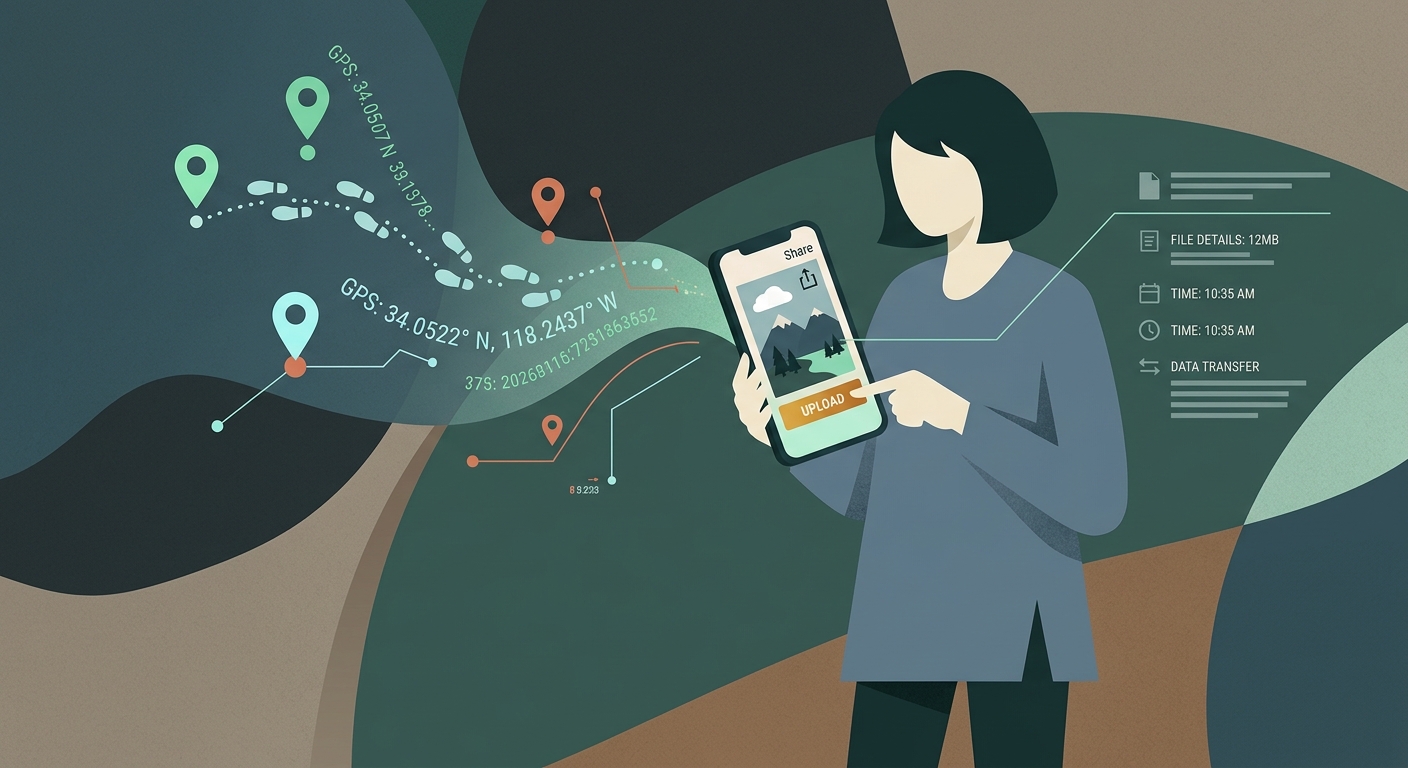
Use watermarks and metadata. Watermark personal photos with your name or copyright notice. It doesn't stop deepfakes, but it proves ownership in legal disputes. Remove metadata from photos before uploading (your phone's location data, camera details, timestamps can be scraped).
Monitor your digital footprint. Set up Google Alerts for your name. Use reverse image search monthly to see where your photos appear online. If you find your images on data broker sites (Data.com, PeopleFinders, etc.), request removal. Most will comply. It takes time, but it reduces the pool of your photos available for scraping.
2. Encrypt Your Browsing & Protect Your Location
Data scrapers are tracking you right now. If your images are being collected for deepfakes, your location and browsing data are being tracked to understand your patterns, habits, and vulnerabilities. A VPN encrypts your connection so scrapers can't see what sites you visit or where you're connecting from. You need a VPN. Any VPN. Because if your image data is being harvested, if your location is being tracked, if your identity is being stolen—you need encrypted protection. We built Free VPN US knowing the data risks. We don't collect data to misuse you. But the choice is yours. Just use one. It's not optional anymore.
3. Know How to Report (Step-by-Step)
If you discover a deepfake or non-consensual image of yourself:
- Screenshot and document it. Take a screenshot of the post, URL, and platform. Save the timestamp. If you don't report it today, you need proof it existed. Record the number of likes, comments, shares. Screenshot the perpetrator's profile if visible.
- Report on the platform immediately. Instagram: Report the post → Select "It's inappropriate" → "It contains intimate images of me" or "Impersonation." Facebook: Similar path → Report post → "Intimate images." TikTok: Report → "Abuse or harassment" → "Sexual content" → "Non-consensual intimate images." Twitter/X: Report → "It's abusive or harmful" → "Non-consensual intimate images." Each platform has a specific path. Use it.
- File with NCMEC (if minors are involved). Go to CyberTipline.org. Report non-consensual intimate images of minors. NCMEC forwards it to law enforcement and platforms. This creates an official record.
- Contact Cyber Civil Rights Initiative. Cybercivilrights.org has resources for survivors, legal templates, and support for the reporting process. You're not alone in this.
- File a police report. Go to your local police department. Bring your screenshots and documentation. Ask for a case number. If they refuse, escalate to the detective bureau. Legal action requires an official report.
- Send a cease-and-desist letter (optional but powerful). If you know who created the images, send a legal letter demanding removal and threatening civil action. Many perpetrators delete content when faced with legal consequences. Organizations like CCRI can help draft this.
4. Detect Deepfakes (Before They Destroy You)
Reverse image search. Google Images: Upload your photo or paste the URL. If your images have been used to create deepfakes, you might find the fake versions. Won't find everything, but it's a start.
Use detection tools. Reality Defender and Sensity AI analyze videos and images for signs of AI generation (compression artifacts, unnatural eye reflections, skin texture inconsistencies). Not perfect, but useful. Run suspicious videos through these. They'll tell you if it's a deepfake.
Set up monitoring. Google Alerts for your name will email you when you're mentioned online. It catches some deepfakes. Not all. But it's free and it helps.
5. Support Survivors (If You Know One)
Believe them. When someone tells you their image has been weaponized, your instinct might be to say "just ignore it" or "don't give it attention." Don't. Survivors are experiencing psychological trauma. They need support, not minimization.
Don't share, repost, or search for the images. Every share, every search, every view is engagement that spreads the harm. If someone sends you a link, don't click it. Report the message and block the sender.
Help them report. The reporting process is overwhelming when you're traumatized. If you know someone experiencing this, help them screenshot, document, and file reports. Be their advocate.
Point them to resources. Cyber Civil Rights Initiative, NCMEC's CyberTipline, and the Trauma Recovery Network are real support. Share these links. They're lifelines for survivors.
The Systemic Problem Nobody's Solving
Deepfakes exist because three things converged:
- Technology became easy. You don't need coding knowledge or expensive equipment. Free tools like DeepFaceLab exist. Anyone can create a convincing deepfake in an afternoon.
- Data became abundant. Your face is everywhere—Instagram, Facebook, LinkedIn, news sites, public records. Data brokers have your photos catalogued and available for sale. Scrapers pull billions of images daily. There's no shortage of raw material.
- Consequences are minimal. Most perpetrators are anonymous. They operate on private Telegram channels, Discord servers, and underground forums. Law enforcement rarely finds them. Platforms take weeks to remove content. Civil lawsuits are expensive and take years. The incentive to create and spread deepfakes is high. The risk is low.
Until platforms invest in real-time detection, until law enforcement gets the training and resources to investigate these crimes, until data brokers stop selling your images—deepfakes will keep happening. And victims will keep suffering.
But you have power. Every report matters. Every demand to platforms for faster action matters. Every time you refuse to share a deepfake, you break the spread. Every time you support a survivor, you reduce the isolation. Change comes from the people being harmed and those who stand with them. Not from the platforms. Not from politicians moving slowly. From you.
Questions People Ask
How do I report a deepfake image on social media platforms?
On Instagram, Facebook, and TikTok: Report the post directly through the platform's report function and select "Intimate images" or "Impersonation." Twitter/X allows reports for "Non-consensual intimate images." Include context about where you first saw it. File complaints with the National Center for Missing and Exploited Children (NCMEC) if it involves minors. Document everything with screenshots before reporting.
What tools can help me detect if a deepfake has been made of me?
Google's Reverse Image Search can find where your photos appear online. Tools like Sensity AI and Reality Defender detect AI-generated faces by analyzing videos for compression artifacts, unnatural eye reflections, and facial tics. However, deepfakes are improving faster than detection tools. The best strategy is Google Alerts (set them for your name) and periodic reverse image searches. Request periodic removals from deepfake sites and NCMEC's CyberTipline.
Are there legal protections against deepfake non-consensual imagery?
Some U.S. states have added deepfake laws—Virginia, California, New York, and others now criminalize non-consensual intimate images created via AI. Defamation laws apply if the deepfake damages reputation. Civil remedies include cease-and-desist letters. However, enforcement across state and international borders is weak. Always file a police report and save evidence. Legal help from organizations like Cyber Civil Rights Initiative is available. Laws are evolving, but they're still catching up to the technology.
How do I protect my personal images from being scraped for deepfakes?
Limit public photos on social media—use private accounts and restrict who can download images. Disable facial recognition where possible. Remove old photos from public archives. Use a VPN to encrypt your browsing so data scrapers can't track your online behavior. Regularly check Google's "About me" feature and request removal of your images from Data.com and similar brokers. Cover your face partially in profile pictures. Be aware that once something is public, it can be copied, so assume everything could be used.
What Else You Should Know
Deepfakes are evolving. Platforms are scrambling. Your protection strategies need to keep pace with the threat. Here's what's changing, and what you need to do next.
Related Resources

Get the Privacy Protection You Deserve
Deepfakes and data theft don't happen to someone else. They happen to people like you, every day. Protect your images, encrypt your connection, and take back control of your digital identity. Free VPN US keeps your browsing encrypted and your location hidden from data scrapers and identity thieves.
- Encrypt your connection
- Hide your location
- Block data scrapers